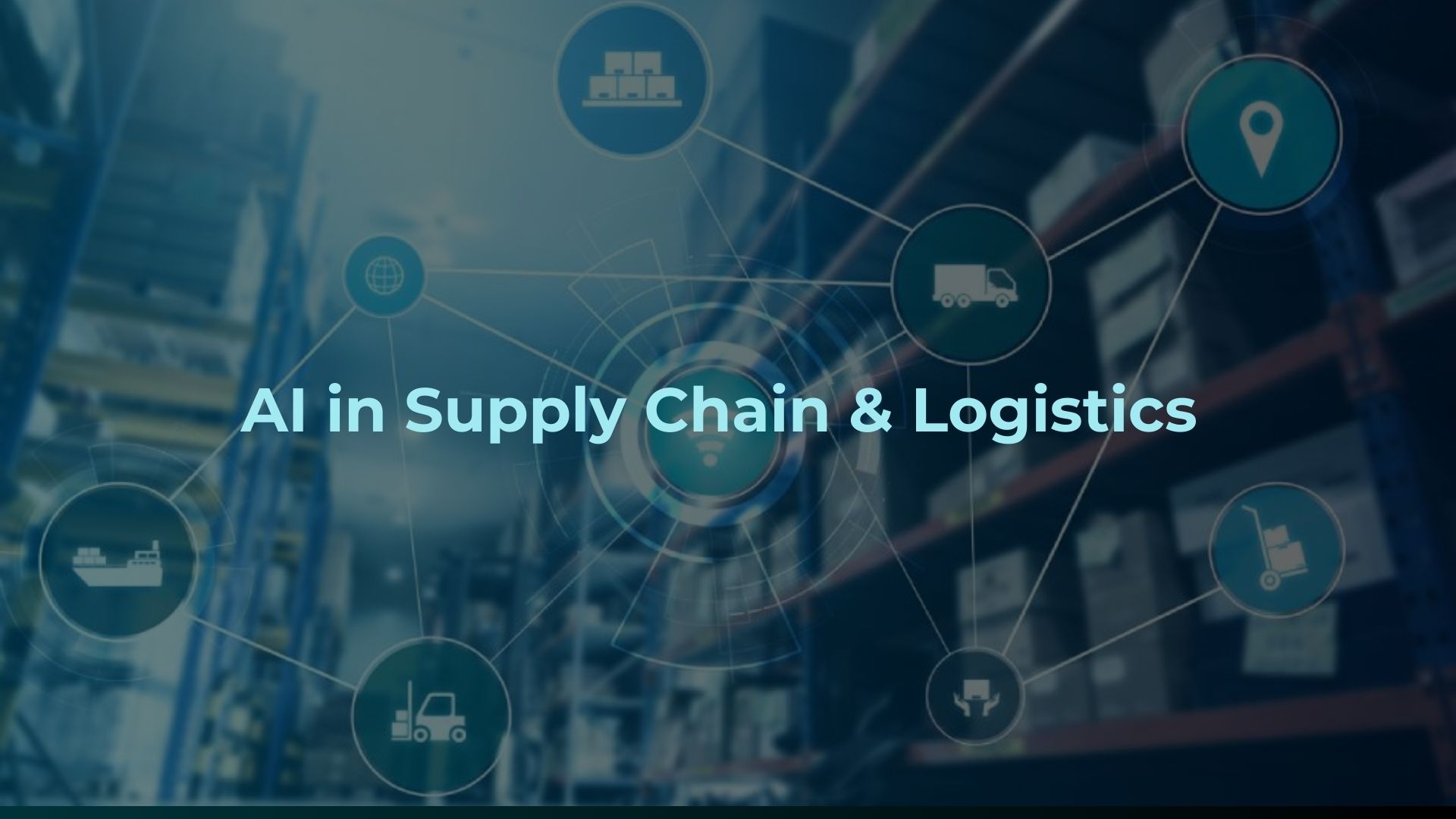

Global supply chains are more complex than ever. Rising customer expectations, fluctuating demand, geopolitical disruptions, and cost pressures have made traditional, rule-based supply chain systems insufficient.
AI in supply chain and logistics is enabling organizations to move from reactive operations to predictive, data-driven, and highly adaptive supply networks. From forecasting demand to optimizing transportation and inventory, AI is becoming a critical capability for modern logistics operations.
In this blog, we explore how AI is transforming supply chain and logistics, key use cases, and best practices for successful implementation.
Why Does AI Matters in Modern Supply Chains?
Supply chains generate massive volumes of data—from procurement and inventory to transportation and delivery. Manually analyzing this data is slow, complex, and prone to error.
AI helps supply chain leaders predict demand more accurately, optimize inventory planning, reduce transportation costs, increase end-to-end visibility, and respond faster to disruptions. By continuously learning from operational data, AI systems enable smarter decisions that improve service levels while controlling costs.
The result is lower operational expenses, stronger resilience, and improved customer satisfaction.
Key Areas Where AI Is Transforming Supply Chain & Logistics
AI-powered solutions are delivering measurable value across the entire supply chain lifecycle. From upstream supplier management to last-mile delivery, intelligent systems are helping organizations adapt to volatility and improve operational efficiency.
Core transformation areas include demand forecasting, inventory optimization, transportation planning, warehouse automation, and supplier risk monitoring. These capabilities enable organizations to operate with precision even in uncertain environments.
AI-Driven Demand Forecasting
Accurate demand forecasting is the foundation of an efficient supply chain. AI models analyze historical sales data, seasonal patterns, promotional activities, and external variables such as economic indicators and weather conditions.
Unlike traditional statistical models, AI adapts quickly to changing trends and unexpected market shifts. This improved forecasting accuracy reduces stockouts, prevents overproduction, and aligns supply more closely with actual customer demand.
Inventory Optimization and Planning
AI enhances inventory planning by recommending optimal stock levels based on real-time demand signals and supply variability. It identifies slow-moving or obsolete inventory and balances service-level targets with carrying costs.
By dynamically adjusting replenishment strategies, AI supports lean and just-in-time models while minimizing excess stock. This improves working capital efficiency and reduces waste across the supply network.
Transportation and Route Optimization
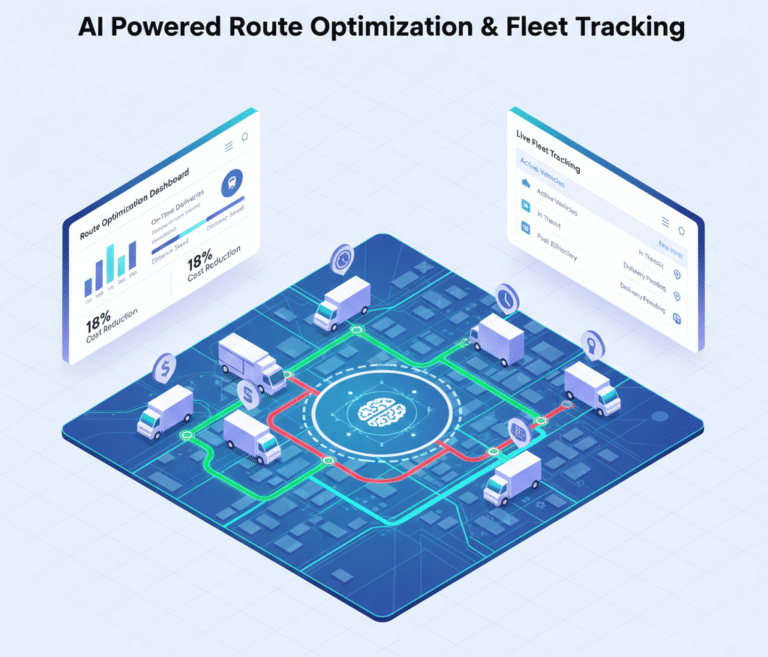
Logistics and transportation often represent one of the largest cost centers in supply chain operations. AI-powered routing systems optimize delivery paths in real time, reducing fuel consumption and transit times.
By analyzing traffic patterns, weather conditions, delivery constraints, and fleet availability, AI dynamically adjusts routes to avoid delays and disruptions. These optimizations improve fleet utilization, lower transportation costs, and enhance on-time delivery performance.
Warehouse Automation and Operations
Warehouses are rapidly evolving into intelligent, automated environments. AI enables intelligent picking and packing, demand-based labor planning, predictive maintenance for equipment, and computer vision systems for quality and safety monitoring.
By reducing manual errors and operational bottlenecks, AI-driven warehouses increase throughput and improve overall operational efficiency.
Supply Chain Visibility and Risk Management
Disruptions are inevitable, but their impact can be minimized with predictive intelligence. AI provides real-time visibility across suppliers, logistics partners, and distribution networks.
Through supplier risk scoring, early disruption detection, and scenario modeling, organizations can anticipate challenges before they escalate. Predictive insights allow proactive mitigation strategies, improving supply chain resilience and business continuity.
Integration with Enterprise Systems
For AI to deliver sustainable value, it must integrate seamlessly with enterprise platforms such as ERP and SCM systems, Transportation Management Systems, Warehouse Management Systems, and IoT-based tracking solutions.
When AI insights flow directly into operational systems, organizations can automate decisions and embed intelligence into daily workflows. Integration ensures that predictive insights translate into measurable operational impact rather than remaining isolated analytics outputs.
Conclusion
AI is transforming supply chain and logistics by enabling smarter forecasting, optimized inventory, efficient transportation, and resilient operations. Organizations that embed AI across their supply networks gain real-time visibility, reduce costs, and respond faster to disruption.
The future of supply chains is intelligent, adaptive, and AI-driven.
Looking to modernize your supply chain with AI?
- Connect us – https://internetsoft.com/
- Call or Whatsapp us – +1 305-735-9875
In the end
Choosing the right AI strategy for supply chain and logistics in 2026 depends on business objectives, data availability and quality, system interoperability, scalability requirements, and the complexity of end-to-end supply chain operations. Whether AI is applied to demand forecasting, inventory optimization, route planning, warehouse automation, or risk mitigation, advances in machine learning, predictive analytics, and generative AI are enabling intelligent, real-time decision-making across supply networks. As AI continues to mature, supply chain solutions are becoming more resilient, transparent, and autonomous—helping organizations reduce costs, improve service levels, and respond faster to disruptions.
As a leading software development company in California, Internet Soft helps enterprises design, build, and scale AI-powered supply chain and logistics solutions that integrate seamlessly with existing ERP, WMS, TMS, and procurement systems. From identifying high-impact use cases and building robust data pipelines to model selection, deployment, and continuous optimization, Internet Soft delivers end-to-end AI solutions tailored for modern supply chain environments.
By partnering with Internet Soft, a trusted AI development partner, organizations can ensure their AI-driven supply chain systems are built using the latest AI technologies and enterprise best practices. Our focus on security, scalability, performance, and real-world adoption ensures AI solutions deliver operational efficiency, predictive insights, and sustainable competitive advantage across the entire supply chain and logistics ecosystem.
ABOUT THE AUTHOR

Abhishek Bhosale
COO, Internet Soft
Abhishek is a dynamic Chief Operations Officer with a proven track record of optimizing business processes and driving operational excellence. With a passion for strategic planning and a keen eye for efficiency, Abhishek has successfully led teams to deliver exceptional results in AI, ML, core Banking and Blockchain projects. His expertise lies in streamlining operations and fostering innovation for sustainable growth